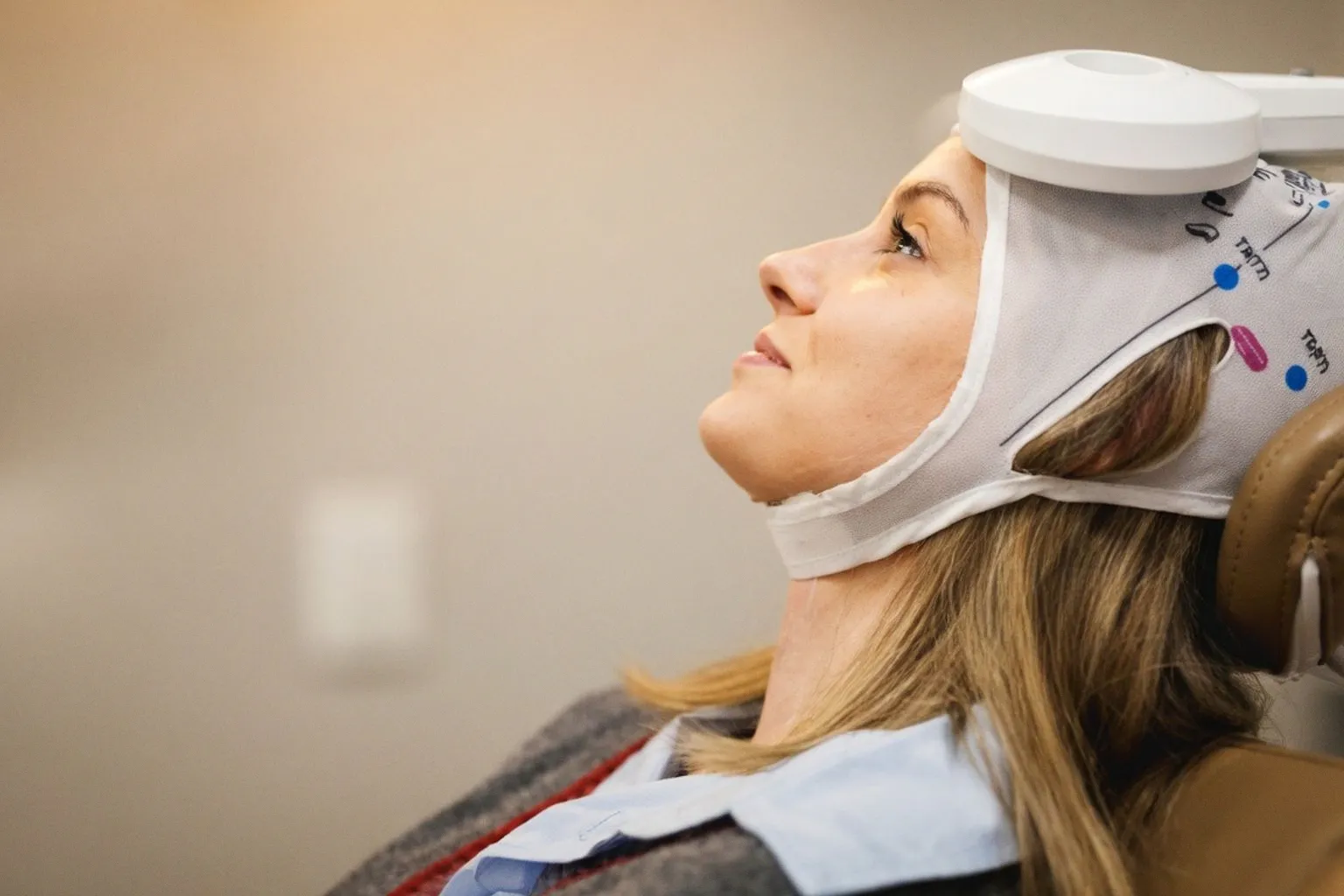
The report places these approaches alongside a broader discussion of less conventional stress therapies, also reflected in coverage by Tatler Asia. For readers interested in hypnotherapy, Rapid Transformational Therapy, or personal empowerment coaching, the distinction is important: emerging neurological treatment is not the same as established psychological practice.
A developing clinical direction
The reported focus is on therapies designed to address pain and depressive symptoms that affect women. Brain stimulation is therefore being presented as a field moving toward more targeted applications, rather than as a completed treatment category with uniform outcomes.
That distinction matters. A conference can accelerate research attention, institutional discussion, and clinical experimentation without establishing that a therapy is effective for every patient. The headline indicates momentum. It does not, by itself, establish treatment approval, long-term safety, comparative effectiveness, or suitability for individual use.
For clinical readers, the relevant signal is the direction of research. Neurological interventions are being considered in relation to women’s health rather than treated as a gender-neutral problem. That may eventually influence how clinicians evaluate depression and pain, but the available evidence in this report remains limited to the conference coverage.
What this means for hypnotherapy and coaching
Brain stimulation and hypnotherapy operate through different clinical frameworks. The former belongs to a technology-based medical research pathway. The latter is generally discussed through psychological mechanisms, behavioral conditioning, attention, expectation, and cognitive change. The two should not be presented as interchangeable methods.
This is especially relevant when marketing language collapses all forms of “reprogramming” into one category. A neurological intervention should not be used as proof that subconscious techniques have a specific biological effect. Conversely, interest in brain stimulation does not invalidate psychotherapeutic or hypnotic work. It simply reinforces the need to separate mechanism, evidence, and clinical purpose.
Readers considering any intervention should identify what is actually being offered. Is it a medical treatment, a psychotherapy, a structured hypnosis session, or a coaching program? The label determines the appropriate standard of evidence and the type of professional oversight that should be expected. Claims that rely only on shared language—such as “rewiring,” “resetting,” or “reprogramming”—do not establish that two interventions work in the same way.
Where caution is required
The report does not provide enough information to support a treatment decision. It does not establish which brain-stimulation methods were discussed, how many participants were involved, how outcomes were measured, or whether the approaches are available for routine care. Those unanswered questions are not minor technicalities. They define whether a research signal can be translated into a reliable clinical option.
The practical response is therefore controlled observation rather than immediate adoption. Readers should look for clearly identified treatment protocols, published clinical data, stated limitations, and a qualified professional responsible for assessment. Any provider using conference news to promise rapid relief, guaranteed emotional change, or a direct neurological explanation for a coaching method is moving beyond what this report supports.
The central development is not that brain stimulation has solved women’s pain or depression. It is that research attention is expanding in this direction. For patients and practitioners in the subconscious-health field, the concrete task is to maintain category discipline: distinguish emerging medical research from hypnotherapy, distinguish therapy from coaching, and treat early momentum as a reason to monitor evidence—not as evidence in itself.